


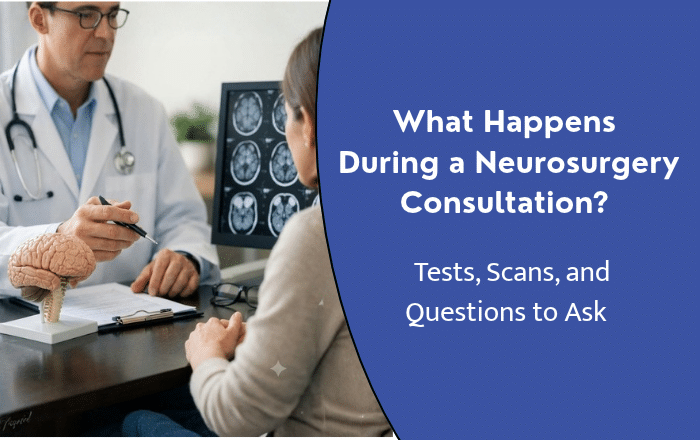
A first visit to a neurosurgeon can feel stressful. Many people arrive with a scan report in hand and one big worry: “Will I need surgery?”
In reality, a neurosurgery consultation is mostly a conversation and a careful check-up. The doctor listens, examines you, looks at your reports and then explains what is going on and what the options are. Surgery is only one of those options, and it is not advised for everyone.
This guide walks you through what to bring, what happens in the room, which tests and scans may be suggested and the questions worth asking.
Who Should See a Neurosurgeon?
A neurosurgeon treats conditions of the brain, spine and nerves. Your family doctor or physician may refer you, or you may choose to book a visit yourself if you have:
- Headaches that are new, severe or keep returning
- Back or neck pain with numbness, tingling or weakness in the arms or legs
- Seizures, fainting spells or sudden changes in speech or balance
- A head injury or an abnormal finding on an MRI or CT scan
- Pain in the face or hands that does not settle with usual treatment
Seeing a neurosurgeon does not mean an operation is planned. Many people are advised medicines, physiotherapy, lifestyle changes or simple monitoring first.
What to Bring to Your Neurosurgery Consultation
Good preparation makes the visit more useful. Try to carry:
- All previous scans and reports, including the actual films or CD, not only the written report
- Your current medicine list or the strips themselves, including blood thinners
- Old prescriptions, discharge summaries and blood test reports
- A short note on when symptoms began, what makes them better or worse and any treatment tried
- A family member who knows your history
What Happens During the Consultation?
1. A Detailed Conversation
The doctor starts by asking about your symptoms: when they started, how they have changed and how they affect your sleep, work and daily activities. Expect questions about past illnesses, surgeries, allergies, medicines and any family history of similar problems.
Be honest and specific. Small details, such as pain that wakes you at night or numbness while driving, can help find the cause.
2. A Neurological Examination
This is a hands-on check of how your nervous system is working. It is painless and usually takes a few minutes. The doctor may check:
- Muscle strength in your arms and legs
- Reflexes, using a small hammer
- Sensation to touch or pinprick
- Balance, walking and coordination
- Eye movements, vision, speech and memory
3. Review of Your Scans and Reports
Your symptoms, examination and scans are read together, because a scan can show changes that do not always cause problems. A finding on an MRI may be unrelated to your complaint, and this is one reason a clinical review matters.
4. Discussion of the Likely Cause and Next Steps
At the end, the doctor explains the probable diagnosis in plain language, whether more tests are needed and which treatments are possible. Ask for anything to be repeated if it is unclear. You can also take time to decide.
Tests and Scans You May Be Advised
Not everyone needs every test. The doctor advises investigations only when they will help decide the treatment. Common ones include:
- MRI: gives detailed pictures of the brain, spinal cord, discs and nerves. Tell the staff if you have a pacemaker, metal implants or fear of closed spaces.
- CT scan: a quick scan, often used after head injury or to look at bones and bleeding
- X-ray: shows bone alignment and, in the spine, movement between bones in some cases
- CT or MR angiography: looks at the blood vessels of the brain or neck
- Nerve conduction study or EMG: checks how well nerves and muscles are working
- EEG: records brain activity when seizures are suspected
- Blood tests: for sugar, infection, clotting or fitness for a procedure
If you already have recent scans, ask whether they are enough before repeating them. For more on when a visit is advisable, read when you should see a neurosurgeon for back pain.
Questions to Ask Your Neurosurgeon
Write your questions down before you go. Here are some useful ones:
- What do you think is causing my symptoms?
- Do my scans match what I am feeling?
- Which treatments are possible, and which ones do you suggest first?
- Is surgery needed now, or can it wait while we try other options?
- If surgery is advised, what does it involve, and what are the risks and limits?
- What recovery should I expect, and when can I return to work and normal activity?
- Which warning signs mean I should call you or go to emergency?
- When should I come back for a review?
It is perfectly acceptable to ask for a second opinion. A good discussion should leave you clearer, not more confused.
What Comes After the Consultation?
Depending on the findings, the plan may be one of these:
- Observation: regular check-ups with repeat scans if needed
- Non-surgical treatment: medicines, physiotherapy, injections, posture changes or other measures
- More tests: to confirm the diagnosis
- Surgery: only when the benefits outweigh the risks for you. Our guide on minimally invasive neurosurgery explains one such approach.
When Not to Wait for an Appointment
Go to the nearest emergency department without delay if you have sudden severe headache, weakness or numbness on one side, trouble speaking, a seizure, loss of bladder or bowel control, or a head injury followed by repeated vomiting or drowsiness. See also our note on common neurological emergencies.
Frequently Asked Questions
Q1. Will I need surgery after a neurosurgery consultation?
Not necessarily. Many conditions are first managed with medicines, physiotherapy or monitoring. Surgery is discussed only when it is likely to help and the risks are acceptable for you.
Q2. How long does a neurosurgery consultation take?
It varies with your condition and the number of reports to review. Allow enough time for the history, examination and a proper discussion, and avoid rushing.
Q3. Do I need an MRI before my first visit?
Not always. If you already have scans, bring them. If you do not, the doctor will tell you whether any tests are needed after examining you.
Q4. Is a neurological examination painful?
No. It involves checking strength, reflexes, sensation and balance, and is usually painless. Tell the doctor if any movement increases your pain.
Q5. Can a family member come with me?
Yes, and it often helps. They can add to your history and remember the instructions given.
Q6. Can I get a second opinion?
Yes. It is a normal part of making an important decision. Carry all your reports so the second doctor sees the full picture.
This article is for general information and is not a substitute for medical advice. Please consult a doctor about your own symptoms.
Planning a Neurosurgery Consultation in Pune?
Knowing what to expect makes the visit easier. If you have symptoms that need a neurological opinion or a scan result you do not understand, you can book a consultation.
Dr. Ninad Patil, Neurosurgeon with 12+ years of experience, completed MBBS at Grant Medical College, Mumbai, MS at Government Medical College, Miraj, and M.Ch. in Neurosurgery at PGIMER, Chandigarh. He consults at Ibhanan Clinic, Viman Nagar, Pune. You can also read about the conditions treated at the clinic.
Address: Ibhanan Clinic, DNK Square, 805, Airport Road, Sakore Nagar, Viman Nagar, Pune, Maharashtra 411014