


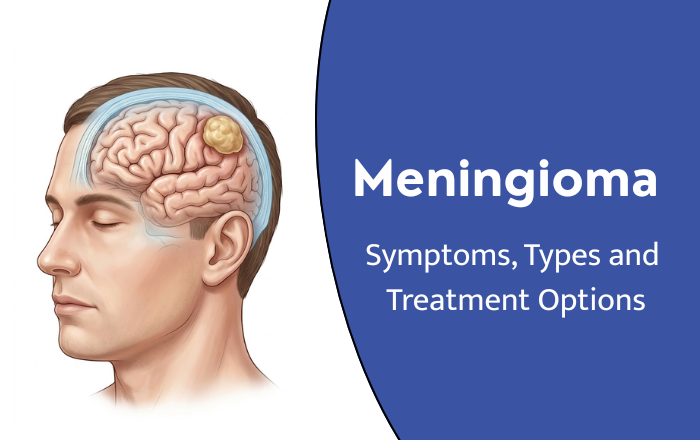
A meningioma is a tumor that develops from the meninges, the protective layers surrounding the brain and spinal cord. Most meningiomas grow slowly and are non-cancerous, and some may not cause symptoms for years. However, depending on their size, location and growth pattern, they can put pressure on nearby brain tissue or nerves and cause neurological symptoms.
If you or someone in your family has recently been diagnosed with a meningioma, understanding its symptoms, types, diagnosis and treatment options can make the situation easier to understand. Treatment is not the same for every patient. Some small, slow-growing tumors can be monitored, while symptomatic or faster-growing tumors may require surgery, radiation therapy or other treatment.
What Is a Meningioma?
A meningioma is a tumor that begins in the meninges, the membranes that protect the brain and spinal cord. Although it does not originate from brain tissue itself, a meningioma located around the brain is generally classified as a primary central nervous system tumor. Meningiomas are among the most common primary brain tumors.
Most meningiomas are slow-growing. In fact, some are discovered incidentally when a person undergoes an MRI or CT scan for an unrelated reason. A diagnosis does not automatically mean that immediate surgery is required.
The appropriate approach depends on factors such as:
- Tumor size
- Location
- Growth rate
- Symptoms
- Tumor grade
- Age and overall health
- Whether the tumor can be safely removed
What Are the Types of Meningioma?
Meningiomas can be classified according to their microscopic characteristics and grade. The World Health Organization grading system generally groups them into three grades.
Grade 1 Meningioma
Grade 1 is the most common type. These tumors are generally slow-growing and have a lower likelihood of returning after treatment. Some small, symptom-free Grade 1 meningiomas can be monitored with regular imaging rather than treated immediately.
Grade 2 Meningioma
Also called atypical meningioma, Grade 2 tumors have a greater tendency to grow or recur compared with Grade 1 tumors. Treatment and follow-up may therefore need to be more proactive.
Grade 3 Meningioma
Grade 3, also called anaplastic or malignant meningioma, is uncommon but more aggressive. These tumors tend to grow faster and are more likely to invade nearby tissues or recur. Surgery and radiation therapy are commonly considered as part of treatment.
The exact subtype and grade are usually determined through examination of tumor tissue when surgery or biopsy provides tissue for pathological assessment.
What Are the Symptoms of Meningioma?
Meningioma symptoms depend largely on where the tumor develops and how much pressure it puts on surrounding structures. Some people have no symptoms, particularly when the tumor is small or slow-growing.
Possible symptoms include:
- Headaches that are persistent, worsening or different from usual
- Seizures
- Blurred or double vision
- Hearing changes or ringing in one ear
- Weakness or numbness in an arm or leg
- Facial numbness, pain or weakness
- Difficulty speaking or understanding language
- Memory problems or confusion
- Changes in mood or personality
- Loss of smell
- Problems with balance or coordination
Spinal meningiomas can cause different symptoms, including leg weakness, numbness, difficulty walking and, in some cases, bladder or bowel problems.
Having one of these symptoms does not mean that a person has a meningioma. Headaches, seizures, vision changes and similar symptoms can have many possible causes, so medical evaluation is needed to determine the underlying reason.
How Is Meningioma Diagnosed?
Diagnosis usually begins with a discussion about symptoms and medical history, followed by a neurological examination. The doctor may assess strength, reflexes, coordination, balance, vision, hearing and other neurological functions.
Imaging tests are then commonly used.
– MRI Scan
An MRI of the brain or spine can show the tumor’s size, location and relationship with nearby structures. Contrast-enhanced MRI may provide additional information about the lesion.
– CT Scan
A CT scan can also help identify a meningioma and may be particularly useful for evaluating nearby bone changes.
– Biopsy or Surgical Tissue Examination
Imaging can strongly suggest a meningioma, but examination of tumor tissue is used to determine the precise pathological type and grade when tissue is obtained. The grade helps doctors understand the tumor’s behavior and plan further treatment.
When Should You Consult a Doctor?
A persistent or progressively worsening neurological symptom should not be ignored, particularly when it is accompanied by changes in vision, strength, speech, memory or coordination.
Seek urgent medical attention for symptoms such as:
- A sudden seizure
- Sudden weakness or numbness
- Sudden difficulty speaking
- Sudden major changes in vision
- A sudden, extremely severe headache
- New confusion or significant loss of consciousness
These symptoms can have several causes, some of which require emergency treatment.
For symptoms that develop gradually, such as recurring headaches, progressive vision problems or changes in balance, arrange an evaluation with a qualified healthcare professional.
Meningioma Treatment Options
Meningioma treatment depends on the tumor’s size, location, growth, symptoms, grade and the person’s overall health. There is no single treatment that is appropriate for every meningioma.
1. Observation and Regular Monitoring
A small meningioma that is not causing symptoms and appears slow-growing may not require immediate treatment.
Doctors may recommend active surveillance, which involves periodic MRI or other imaging and clinical follow-up. If the tumor remains stable, monitoring may continue. If it grows or begins causing symptoms, treatment can then be considered.
2. Surgery
Surgery may be recommended when a meningioma is causing symptoms, growing, is large or is putting pressure on important structures.
The aim is generally to remove as much of the tumor as can be done safely while protecting surrounding brain tissue, nerves and blood vessels. Complete removal is not always possible or appropriate, particularly when a tumor is located close to critical structures.
The surgical approach depends on the tumor’s location, size and relationship with surrounding anatomy.
3. Radiation Therapy
Radiation may be recommended in selected situations, including some tumors that cannot be safely removed, residual tumor after surgery, or higher-grade or recurrent meningiomas.
Stereotactic radiosurgery is one focused form of radiation treatment that may be considered for selected smaller tumors. Other forms of radiation may be used depending on the tumor and individual circumstances.
4. Additional Drug-Based Treatment and Clinical Trials
Most meningiomas are not treated with conventional chemotherapy. For recurrent or difficult-to-treat tumors, particularly higher-grade tumors, specialists may consider selected drug treatments or clinical trials depending on the individual case. Research into targeted treatments and immunotherapy for meningioma is ongoing.
Can a Meningioma Be Treated Without Surgery?
Yes, in selected cases. Not every meningioma requires immediate surgery.
For example, a small, slow-growing tumor that is not causing symptoms may be monitored with regular scans. Radiation-based treatment may also be appropriate for some patients when surgery is not suitable or when residual or recurrent tumor needs treatment.
The decision should be made after reviewing the patient’s imaging, symptoms, tumor characteristics and overall health.
Frequently Asked Questions
Q1. Is a meningioma always cancerous?
No. Most meningiomas are benign, particularly Grade 1 tumors. However, Grade 2 and Grade 3 meningiomas have more aggressive characteristics and a higher risk of recurrence.
Q2. Does every meningioma require surgery?
No. Some small, asymptomatic and slow-growing meningiomas can be monitored with regular imaging. Surgery is considered when the tumor’s characteristics, location or symptoms make active treatment appropriate.
Q3. What is the most common symptom of meningioma?
Headache can occur, but there is no single symptom that identifies a meningioma. Symptoms depend strongly on the tumor’s location and size. Seizures, vision changes, weakness, numbness and cognitive or speech changes can also occur.
Have questions? We’re just a message away! Contact us on WhatsApp — Click Here to Chat with Us
Concerned About Meningioma? Consult a Neurosurgeon
A meningioma is a tumor arising from the protective membranes around the brain and spinal cord. Many meningiomas grow slowly and may not require immediate treatment, while others can cause neurological symptoms or behave more aggressively.
Understanding the tumor’s location, size, growth pattern and grade is essential when deciding between observation, surgery, radiation therapy or other treatment options. If you have persistent neurological symptoms or have been diagnosed with a meningioma, consultation with a neurosurgeon can help you understand the findings on your scan and the treatment options appropriate for your situation.
If you are seeking evaluation for a diagnosed or suspected meningioma, Dr Ninad Patil, Neurosurgeon with 12+ years of experience, provides consultation at Ibhanan Clinic, Pune, and Medicover Hospital, PCMC. A specialist assessment can help determine the significance of the tumor and whether monitoring or active treatment is appropriate for your individual condition.