


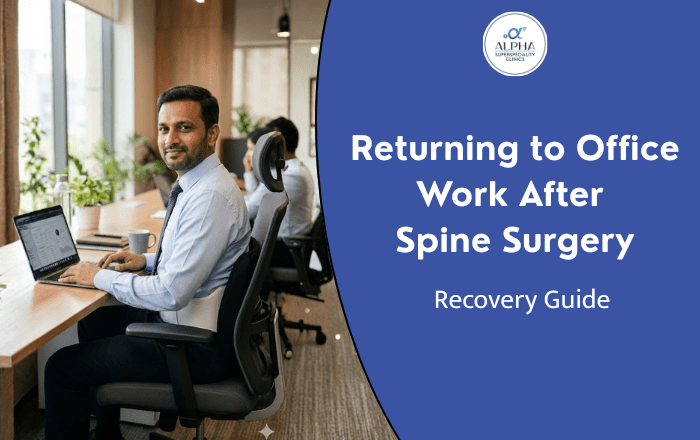
So your spine surgery is done. The hardest part is behind you — and now a new question is sitting in the back of your mind (and maybe causing just as much stress as the surgery itself):
“When can I go back to work?”
If you have a desk job and you’re wondering how to safely return to office after spine surgery, you’re not alone. Thousands of people walk this exact path every year. The good news? With the right timeline, a few smart habits, and guidance from your spine surgeon, returning to office work after spine surgery is absolutely achievable — and it doesn’t have to be scary.
This guide gives you exactly what you need to know.
Why Rushing Back to the Office Is a Real Risk
Here’s something most people don’t hear enough: returning to work after back surgery too soon is one of the most common causes of post-surgical complications.
Studies show that patients who return before their body is ready are significantly more likely to experience setbacks — including re-injury, increased pain, or even hardware failure in fusion cases. On the flip side, patients who follow a structured plan return to work 30% faster than those who try to push through on their own.
The goal isn’t just to get back to your desk. The goal is to stay there — pain-free.
What’s a Realistic Timeline?
The honest answer: it depends on your surgery type.
- Microdiscectomy — Most people with desk jobs can return in 4–6 weeks
- Laminectomy — Usually 6–8 weeks for office work
- Spinal fusion (single level) — Typically 6–12 weeks for sedentary roles
- Multi-level fusion or PLIF/TLIF — Often 3–6 months before returning to office
These are general ranges. Your spine surgeon will give you a specific clearance based on your healing, imaging results, and job demands. Never skip this step.
7 Steps for a Safe Return to Office After Spine Surgery
Step 1: Get Written Medical Clearance
Before you book your first day back, get it in writing. Ask your surgeon for a return-to-work certificate that outlines your specific restrictions — sitting limits, lifting restrictions, break requirements. This protects both you and your employer.
Step 2: Start With a Phased Schedule
Don’t jump straight into a 9-to-5 on day one. Start with 2–3 hours a day, 3 days a week for the first two weeks. Increase gradually as your body responds. Many HR teams support phased returns — communicate your plan early.
Step 3: Set Up an Ergonomic Workspace
Your chair matters more than ever now. Make sure you have:
- A chair with lumbar support that keeps your natural spine curve
- Monitor at eye level so your neck isn’t tilting down
- Feet flat on the floor or on a footrest
- Keyboard at elbow height — no reaching forward
If possible, request a sit-stand desk from your employer. Alternating between sitting and standing every 30–45 minutes takes significant pressure off your spinal discs.
Step 4: Take Breaks Every 20–25 Minutes
One of the best things you can do during spine surgery recovery at work is move regularly. Set a phone alarm. Every 20–25 minutes: stand up, walk for 2–3 minutes, and do gentle back stretches. This prevents disc compression and keeps muscles from stiffening.
Step 5: Continue Physical Therapy
Physical therapy doesn’t stop when your office return begins — it becomes even more important. Your PT exercises (pelvic tilts, bridges, gentle walking) build the core strength that protects your surgical site while you’re sitting for hours. Do not skip sessions because you “feel fine.”
Step 6: Know Your Pain Limit
Rate your pain on a 0–10 scale before you leave home each morning. If you arrive at work and hit a 5 or above, that’s your body asking you to stop. Keep your prescribed medications accessible. Have a plan: if pain spikes, who do you call? When is it time to leave?
Step 7: Talk to Your HR Team
Be open about your restrictions. You are legally entitled to reasonable workplace accommodations during return to work after back surgery. That includes an ergonomic chair, accessible parking, or permission to take standing breaks. Document everything in writing.
3 Warning Signs to Watch After Returning
Even when you’re cleared for work, keep an eye out for:
- New or worsening numbness in your legs or feet — possible nerve issue
- Fever with back pain — may indicate infection at the surgical site
- Sudden loss of bladder or bowel control — go to the ER immediately
If any of these happen, stop work and contact your spine surgeon right away.
Ready to Return Safely? Talk to a Spine Specialist First
Returning to office work after spine surgery is not a decision to make alone or based on how you “feel” on a good morning. It requires proper medical evaluation, a clear timeline, and someone who knows your case inside out.
If you’re based in Pune and looking for trusted guidance on your spine surgery recovery and return to work, consult Dr. Ninad Patil — Spine Surgeon in Pune with over 12+ years of experience in spine surgeries and post-operative recovery planning. Dr. Patil helps patients get back to their lives safely, with a recovery plan that fits their specific surgery, lifestyle, and job demands.
Book your consultation with Dr. Ninad Patil today — because your recovery deserves the same attention as your surgery did.
Frequently Asked Questions
Q1. Can I sit at a desk all day after spine surgery?
Not right away. Start with 30-minute intervals and take walking breaks in between. Gradually increase over weeks with your surgeon’s guidance.
Q2. Is working from home better than returning to office after spine surgery?
It can be — WFH gives you more flexibility with rest and breaks. However, home setups are often less ergonomic, so invest in a lumbar cushion and a proper chair before assuming it’s safer.
Q3. How do I know if I went back too soon?
Worsening pain after the first week back, new numbness, or pain that doesn’t ease with rest are red flags. Contact your surgeon — don’t wait and hope it improves.
Have questions? We’re just a message away! Contact us on WhatsApp — Click Here to Chat with Us