


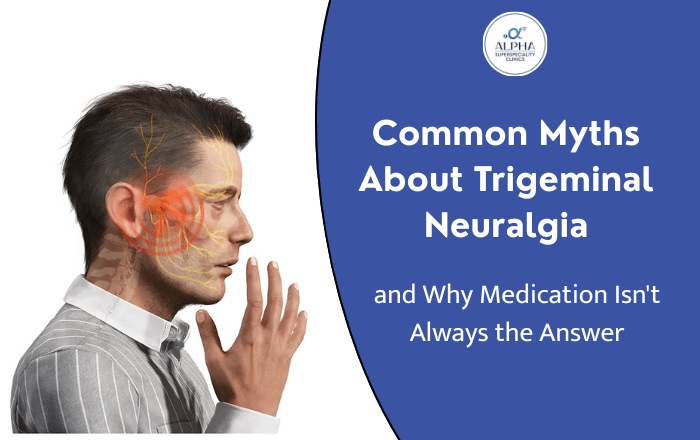
Imagine waking up and being afraid to wash your face. Or skipping meals because chewing triggers a wave of electric-shock pain so intense it takes your breath away. For people living with trigeminal neuralgia, this is not an exaggeration — it is daily life. Often called the “suicide disease” because of how unbearable the pain can be, trigeminal neuralgia remains one of the most misunderstood conditions in medicine. Myths around it are everywhere, and unfortunately, those myths often stop people from getting the right help. Let’s set the record straight.
What Is Trigeminal Neuralgia?
Trigeminal neuralgia (TN) is a chronic pain condition affecting the trigeminal nerve — the nerve responsible for carrying sensation from your face to your brain. Even the lightest touch, a gentle breeze, or sipping water can trigger sudden, stabbing facial pain that lasts a few seconds to a couple of minutes. It affects roughly 1 in 15,000 to 20,000 people and is more common in women over 50, though it can affect anyone at any age.
The problem? It is frequently mistaken for toothaches, sinus issues, or migraines. Studies suggest that up to 50% of trigeminal neuralgia patients undergo unnecessary dental procedures before receiving the correct diagnosis.
7 Common Myths About Trigeminal Neuralgia — Debunked
Myth #1: “It’s Just a Bad Toothache”
This is one of the most damaging myths. Trigeminal neuralgia pain follows the path of the trigeminal nerve — not a tooth root. The pain is typically sudden, sharp, and triggered by touch or movement, not by temperature sensitivity like a cavity. If your dentist can’t find a cause but the pain keeps coming back, it’s time to think beyond dental care.
Myth #2: “Only Older People Get It”
While TN is more common in people over 50, younger adults and even children can develop it. This myth causes dangerous delays in diagnosis for younger patients who are often told they are “too young” to have this condition.
Myth #3: “Medication Will Always Fix It”
Medications like carbamazepine are often the first step in trigeminal neuralgia treatment, and they do help — especially in the early stages. But here’s the uncomfortable truth: nearly 50% of patients eventually stop responding to medication over time. The body builds tolerance, doses increase, and relief shrinks. Medication is a starting point, not always a permanent solution.
Myth #4: “If Medication Fails, Nothing Else Can Help”
This myth keeps people stuck in unnecessary suffering. When trigeminal neuralgia medication stops working, there are other options available — including nerve blocks, Microvascular Decompression (MVD), Gamma Knife Radiosurgery, and other procedures. These are not last resorts. They are legitimate, well-studied treatment paths that a specialist can walk you through.
Myth #5: “Surgery Is Too Dangerous — Medication Is Always Safer”
Long-term medication use comes with its own serious risks — liver stress, cognitive fog, dizziness, and bone density loss. The assumption that staying on pills is always “safer” than other options is simply not accurate. The right choice depends on your specific condition, and that requires a proper specialist evaluation.
Myth #6: “It’s All in Your Head”
People with trigeminal neuralgia are often dismissed as anxious or overly sensitive. This is both incorrect and deeply harmful. TN is a neurological condition with a measurable physical cause — usually compression of the trigeminal nerve, often visible on high-resolution MRI. The pain is real. The condition is real.
Myth #7: “You Just Have to Learn to Live With It”
No, you don’t. Untreated trigeminal neuralgia is linked to depression, social withdrawal, inability to eat properly, and a serious decline in quality of life. Accepting lifelong unmanaged pain is not the only option. Effective trigeminal neuralgia treatment exists — and it starts with finding the right specialist.
Why Medication Isn’t Always the Answer
Anticonvulsant medications work by calming overactive nerve signals. They can bring real relief — but the window of effectiveness often narrows over time. Many patients find themselves increasing doses just to get the same result, while side effects pile up. When that happens, continuing medication alone is no longer serving your health.
Recognizing when to move beyond medication — and knowing what comes next — is something only a trained trigeminal neuralgia specialist can guide you through.
It’s Time to Talk to a Specialist in Pune
If your pain is no longer controlled by medication, if side effects are affecting your daily life, or if you’ve never had a confirmed diagnosis through imaging — please don’t wait.
Dr. Nina Patil, a trusted trigeminal neuralgia specialist in Pune at Ibhanan Clinic, works with patients who have struggled for months or years without real answers. Her approach goes beyond simply adjusting prescriptions. She takes time to understand your pain pattern, reviews the right diagnostic tools, and helps you understand every option available to you.
Name – Dr. Ninad Patil -Neurosurgeon in Pune | Brain & Spine Surgeon | Trigeminal Neuralgia Specialist
Address: Ibhanan clinic, DNK SQUARE, 805, Airport Road, Sakore Nagar, Viman Nagar, Pune, Maharashtra 411014
Phone: 84689 30399
Book a consultation with Dr. Nina Patil at Ibhanan Clinic, Pune today — because understanding your condition fully is the first real step toward feeling better.
Frequently Asked Questions
Q1. Can trigeminal neuralgia be cured?
Many patients achieve long-term relief or complete remission with the right treatment. Outcomes vary, but significant improvement is possible for most people.
Q2. How is trigeminal neuralgia diagnosed?
Diagnosis is based on your pain pattern and confirmed through clinical evaluation and MRI imaging.
Q3. Is trigeminal neuralgia a lifelong condition?
Not necessarily. With appropriate trigeminal neuralgia treatment, many patients experience lasting relief — especially when treated by a specialist.
Have questions? We’re just a message away! Contact us on WhatsApp — Click Here to Chat with Us