


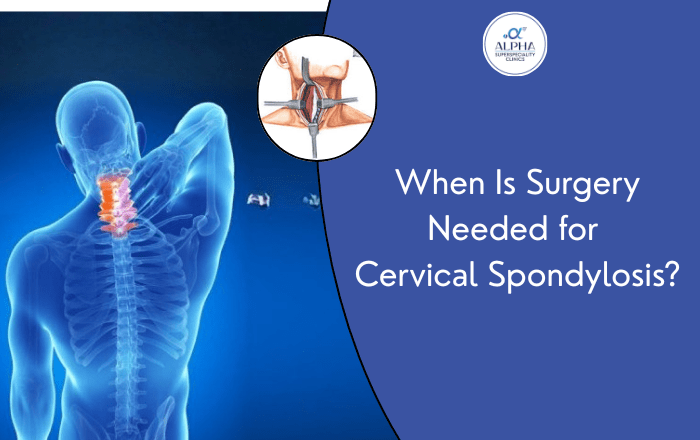
Neck pain that just won’t go away. Arms that feel numb in the middle of the night. A grip that keeps getting weaker. If this sounds familiar, you may already know you’re dealing with cervical spondylosis — but the big question weighing on your mind is probably: Do I actually need surgery?
The honest answer? Most people don’t. But some do and knowing the difference could protect you from permanent nerve damage. Let’s break it down in plain, simple terms.
What Is Cervical Spondylosis?
Cervical spondylosis is age-related wear and tear of the bones and discs in your neck. Over time, discs shrink, bone spurs form, and the space around your spinal cord and nerves gets tighter. It’s extremely common — studies show it appears on X-rays in 85% of people over age 60, even when they feel no symptoms.
For most people, it causes manageable stiffness and occasional neck pain. For others, it presses on nerves or the spinal cord — and that’s where things get serious.
Can It Be Treated Without Surgery?
Yes — and that’s always the first goal.
Non-surgical treatments for cervical spondylosis include:
- Physiotherapy and neck-strengthening exercises
- Pain medications and anti-inflammatory drugs
- Steroid injections to reduce nerve swelling
- Cervical collar for short-term rest
- Posture correction and ergonomic changes
Research shows 75–80% of patients improve significantly with these treatments within 6 to 12 weeks. So surgery is never the first step — it’s the last resort when other methods stop working or when waiting becomes dangerous.
5 Clear Signs That Surgery May Be Needed
This is where most people need honest guidance. Here are the situations where cervical spondylosis surgery becomes necessary:
1. Conservative Treatment Has Failed After 6–12 Weeks
If you’ve done physiotherapy, taken medications, and made lifestyle changes — and your symptoms haven’t improved — your spine likely has structural damage that no amount of rest or exercises can fix. At this point, a surgical consultation makes sense.
2. Persistent Numbness or Weakness in Your Arms and Hands
Occasional tingling is one thing. But if your hands feel consistently numb, weak, or tingly especially if your grip strength is declining — that points to cervical radiculopathy (nerve root compression). This often needs surgical decompression to prevent permanent nerve damage.
3. Trouble With Everyday Tasks — Buttoning a Shirt, Writing, Holding a Cup
Struggling with fine motor tasks is a red flag for cervical myelopathy compression of the spinal cord itself. This is one of the clearest signs that surgery for cervical spondylosis is needed. Myelopathy is progressive; the longer it’s ignored, the harder it is to reverse.
4. Unsteady Walking or Loss of Balance
When the spinal cord is compressed in the neck, it affects your legs too. If you feel clumsy, trip often, or your legs feel unusually heavy, this is a neurological warning sign that needs urgent evaluation.
5. Bladder or Bowel Problems
This is a surgical emergency. If cervical spondylosis has compressed the spinal cord enough to affect bladder or bowel control, you need to see a neurosurgeon immediately not next week.
What Happens If You Wait Too Long?
Here’s something many patients don’t fully understand: cervical myelopathy does not get better on its own. It only gets worse.
Studies consistently show that patients who get surgery early — before severe spinal cord damage sets in — recover far better than those who delay. Waiting too long can mean permanent weakness, numbness, or even paralysis that surgery can no longer fully fix.
If your doctor or imaging suggests spinal cord compression, don’t sit on that information.
Common Surgical Options for Cervical Spondylosis
When cervical spondylosis treatment moves to surgery, the goal is simple: take pressure off the spinal cord and nerves, and stabilize the spine.
The most common procedures include:
- ACDF (Anterior Cervical Discectomy and Fusion) — The damaged disc is removed from the front of the neck and the bones are fused together. It’s the most widely performed cervical spondylosis surgery worldwide.
- Cervical Disc Replacement — An artificial disc replaces the damaged one, preserving movement. Good for younger, active patients.
- Laminectomy or Laminoplasty — Performed from the back of the neck to create more room for the spinal cord. Often used when multiple levels are affected.
Recovery typically takes 3 to 6 months, with most patients noticing relief from arm pain and numbness within the first few weeks after surgery.
Frequently Asked Questions
Q1. Is surgery the only option for cervical spondylosis?
No. Surgery is considered only when non-surgical treatments fail or when there are signs of spinal cord or severe nerve compression.
Q2. How do I know if my symptoms are serious?
Weakness in hands, balance problems, and bladder changes are serious. Neck pain alone usually isn’t a reason for surgery.
Q3. What is the success rate of cervical spine surgery?
For well-selected patients, success rates range from 80–95%, especially for relieving arm pain and neurological symptoms.
Q4. Will I need physiotherapy after surgery?
Yes — post-operative physiotherapy is an important part of recovery and getting your strength and movement back.
Consult Dr. Ninad Patil — Neurosurgeon in Pune
For cervical spondylosis treatment in Pune, we recommend consulting Dr. Ninad Patil, a neurosurgeon with 10+ years of experience in spine and brain surgeries. Practising at Alpha Superspeciality Clinics, Pune, Dr. Patil is known for giving patients clear, honest guidance — whether that means surgery or not.
Book your consultation with Dr. Ninad Patil at Alpha Superspeciality Clinics, Pune — and get the right answers for your spine health today.