


Back pain that won’t quit. Legs that tingle or go numb. A life slowly shrinking because every movement hurts. If this sounds familiar, your doctor may have mentioned endoscopic spine surgery and your first reaction was probably “surgery? No way.”
That reaction is completely normal. But here’s the thing: endoscopic spine surgery is not your grandfather’s back operation. No large incisions. No weeks flat in a hospital bed. Thousands of patients across India walk out of the procedure the same day, often wondering why they waited so long.
This article breaks down everything you actually want to know — the real risks, the real success rates, and honest answers to the questions most people are too nervous to ask.
What Exactly Is Endoscopic Spine Surgery?
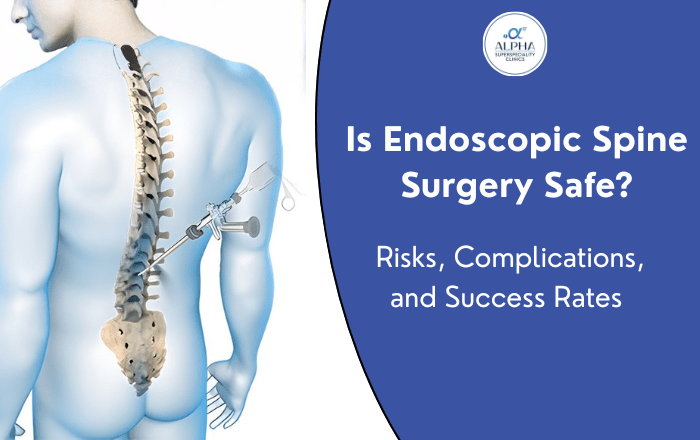
Traditional spine surgery means a long cut, moving muscles aside, and a slow recovery. Endoscopic spine surgery works completely differently. Your surgeon makes a tiny opening — about the size of a pencil — and passes a thin tube with a small camera through it. Everything is visible on a screen. The damaged disc or bone pressing on your nerve is removed without disturbing the healthy tissue around it.
Think of it like the difference between opening a wall to fix a pipe versus threading a camera through a small hole to see exactly where the problem is and fixing only that.
It treats conditions like herniated discs, spinal stenosis, sciatica, and pinched nerves — often in under two hours, with local sedation rather than full general anesthesia.
Is Endoscopic Spine Surgery Actually Safe?
Let’s address the big question directly: yes, endoscopic spine surgery is considered safe, and clinical evidence backs that up.
Because the approach is so targeted, it causes far less disruption to your body than open surgery. Blood loss is minimal. The risk of infection drops significantly — studies show infection rates below 1% for endoscopic procedures, compared to 2–4% with traditional open surgery. There are no large wounds to heal.
That said, “safe” doesn’t mean “zero risk.” Every surgical procedure carries some level of uncertainty, and your overall health, your specific spine condition, and your surgeon’s experience all play a role in how things go.
The Real Risks and Complications — Honest, Not Scary
Here is where we give it to you straight. Knowing the risks doesn’t mean you should be afraid. It means you can make an informed decision.
Common, minor side effects:
- Soreness or mild swelling at the incision site
- Temporary numbness or tingling (usually settles within days)
- Short-term stiffness during the first week of recovery
Rare but serious complications:
- Nerve irritation or — very rarely — nerve injury
- Incomplete removal of the problematic disc fragment (which may require a second procedure)
- Dural tear (a small tear in the protective covering around the spinal cord) — uncommon and manageable when it occurs
Who may not be a suitable candidate: People with severe spinal instability, significant bone disease, or certain other medical conditions may not be ideal candidates for the endoscopic approach. A thorough evaluation before surgery helps identify this.
The bottom line: in the hands of a trained surgeon, the complication rate for endoscopic spine surgery is low — and most complications, when they do occur, are minor and treatable.
Success Rates: What Do the Numbers Actually Mean?
Studies consistently report 90–95% patient satisfaction rates following endoscopic spine surgery. For conditions like lumbar disc herniation and sciatica, outcomes are particularly strong.
But a statistic means nothing unless you understand what it’s measuring. “Success” in spine surgery is tracked by:
- Significant reduction in pain (often measured before and after using standardized pain scores)
- Return to normal daily activities — working, walking, sleeping without disruption
- Patient-reported quality of life improvements at 3, 6, and 12 months post-surgery
Most patients return to light activity within 2 weeks and are back to full function within 4–6 weeks. Hospital stay is typically 1–2 days, often just overnight.
One thing the numbers also make clear: the surgeon’s training and volume of procedures performed matters enormously. A surgeon who has performed hundreds of endoscopic procedures will consistently outperform someone doing it occasionally — regardless of which technique is used.
What to Expect Before, During, and After Surgery
- Before surgery: Your surgeon will order imaging (MRI, CT scan), review your medications, and may ask you to stop blood thinners. Basic blood tests and a fitness check are standard.
- On the day: You arrive, receive sedation, and the procedure typically takes 45 minutes to 2 hours. Most patients feel surprisingly little during and after. You will likely be walking the same evening.
Recovery:
- Day 1–3: Rest, mild discomfort managed with simple pain medication
- Week 1–2: Light walking encouraged, most daily tasks resume
- Week 4–6: Return to desk work, driving, and most physical activity
- Month 3+: Full recovery for the majority of patients
7 practical tips that actually help recovery:
- Walk a little every day — don’t stay in bed
- Sleep on your back or side with a pillow between your knees
- Avoid bending and twisting in the first two weeks
- Stay hydrated and eat enough protein for tissue repair
- Follow your physiotherapy plan seriously
- Don’t rush back to heavy lifting
- Keep all follow-up appointments — early review catches small issues before they become big ones
Frequently Asked Questions
Q1. Is endoscopic spine surgery painful?
Most patients are surprised by how manageable the discomfort is. Pain is usually controlled well with mild oral medication within 48–72 hours.
Q2. Can it be done without general anesthesia?
Yes — and this is one of its biggest advantages. Local sedation is used in most cases, which reduces risks, especially for older patients or those with heart or lung conditions.
Q3. How soon can I walk after surgery?
Many patients walk within a few hours. Light activity resumes within days for most people.
Q4. Is endoscopic spine surgery available in Pune?
Yes. Dr. Ninad Patil, a neurosurgeon at Medicover Hospital, Bhosari, PCMC, performs endoscopic spine surgery and has helped many patients in the Pune region return to a pain-free life.
Take the Next Step — Talk to a Specialist
If you’ve been living with back or leg pain and surgery feels frightening, a consultation is not a commitment — it’s just a conversation. Dr. Ninad Patil, neurosurgeon at Medicover Hospital, Bhosari, PCMC, works with each patient to understand their condition and explain every option clearly before any decision is made.
You deserve honest answers and a clear path forward. Book a consultation with Dr. Ninad Patil today and find out whether endoscopic spine surgery is the right step for you.